




 admin
admin 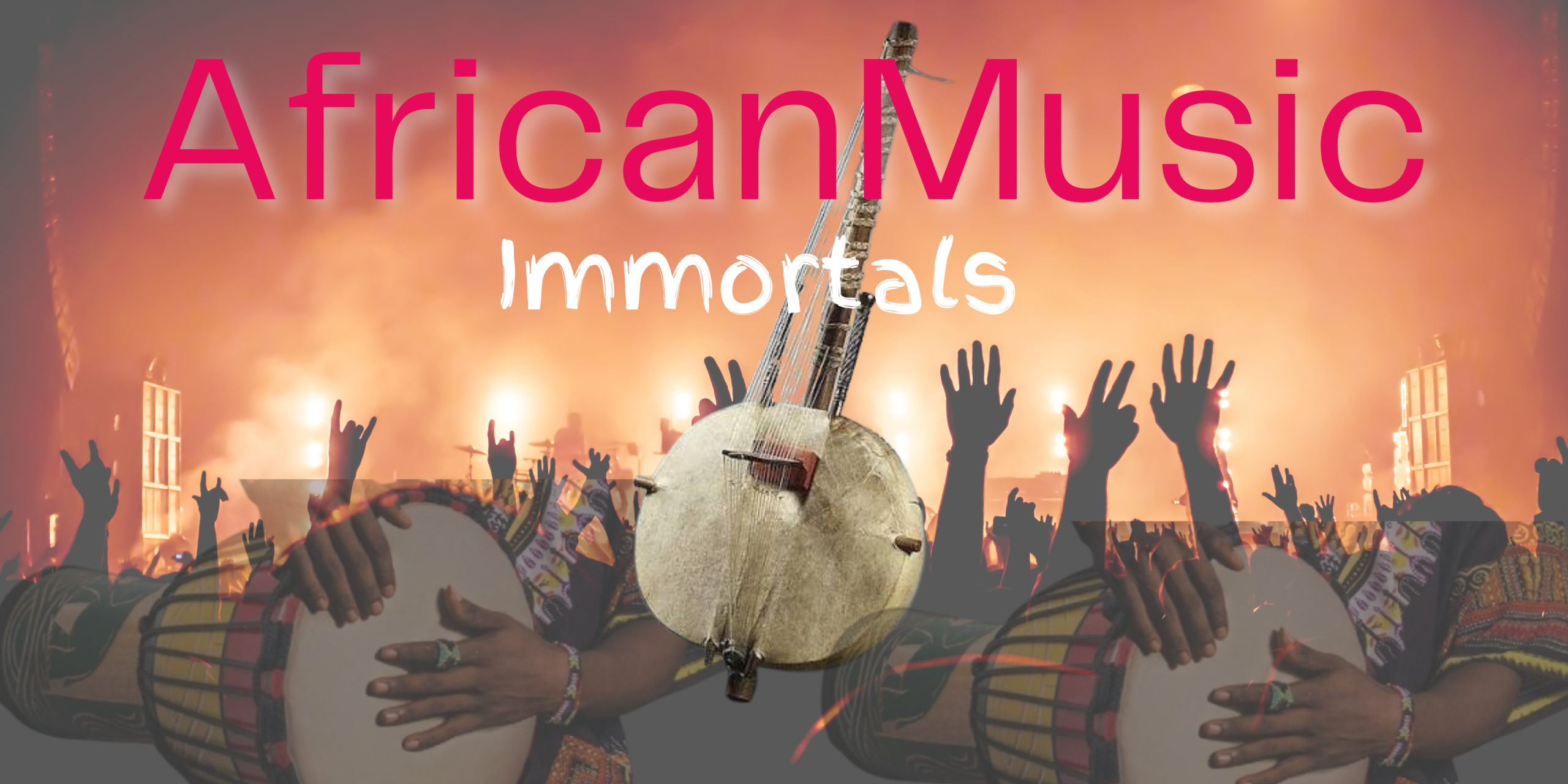
Twenty musical giants whose influence transcends awards, borders and generations
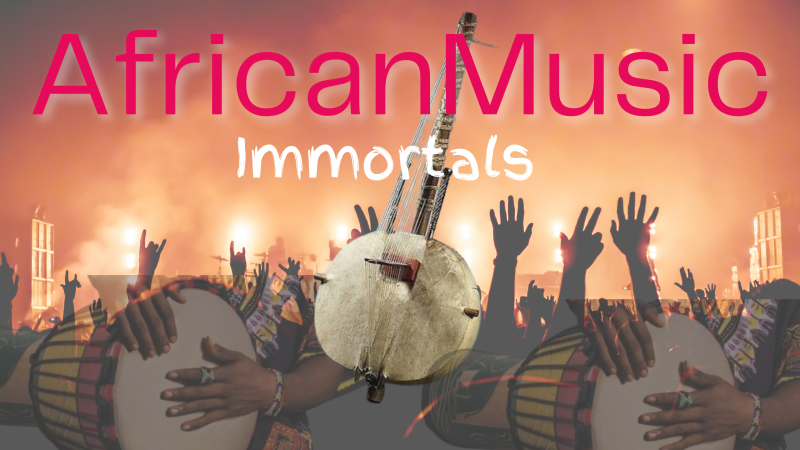
There are musicians who enjoy successful careers, musicians who collect prestigious awards, and then there are musicians whose names become inseparable from the cultural history of an entire continent. Africa has produced all three, but the artists featured in this first tier belong to a particularly distinguished category: musicians whose influence has continued to grow long after their greatest recordings were released.
From the smoky jazz clubs of Johannesburg and the highlife orchestras of West Africa to the rumba halls of Kinshasa, the desert blues traditions of Mali and the international stages of today, these artists have done far more than make records. They have created genres, carried national identities across borders, challenged political systems, preserved cultural traditions and inspired generations of musicians.
This first tier, The Immortals, represents artists whose significance cannot be adequately measured by the number of trophies they have accumulated. Some were Grammy winners, while others were never fully recognised by the major international award institutions during their lifetimes. Some used music as a form of political resistance, while others became ambassadors for traditional cultures and musical traditions that might otherwise have remained largely unknown outside their communities.
What connects them is the extraordinary durability of their influence. Their music outlived the period in which it was created, and their ideas continue to shape the artists, genres and cultural movements that followed.
1. MIRIAM MAKEBA 🇿🇦
Mama Africa
Few names in African music carry the international symbolism of Miriam Makeba. Born in Johannesburg in 1932, Makeba rose from South African vocal groups to become an international star whose voice carried the rhythms, languages and stories of Africa to audiences around the world.
Her breakthrough came through the anti-apartheid film Come Back, Africa, after which she established a career in the United States and Europe. Her music included songs in African languages, including Xhosa and Zulu, while her international platform increasingly became a vehicle for speaking against apartheid.
Makeba made history in 1966 when An Evening with Belafonte/Makeba, recorded with Harry Belafonte, won the Grammy for Best Folk Recording. The Recording Academy recognises her as the first African artist to win a Grammy.
Her importance, however, extends far beyond that historic award. Makeba became a symbol of African dignity at a time when apartheid South Africa was attempting to control how the world understood the country and its people. Her nickname, “Mama Africa,” eventually became much more than an affectionate title; it became a cultural institution that represented the continent itself.
2. FELA ANIKULAPO-KUTI 🇳🇬
The Revolutionary
If Miriam Makeba carried Africa’s voice to the world, Fela Kuti turned music into a powerful instrument of resistance. Born in 1938, Fela developed Afrobeat by bringing together Nigerian and Yoruba musical traditions with jazz, funk, highlife and other influences, but the genre was always about far more than rhythm and entertainment.
Fela’s music confronted corruption, military dictatorship, colonialism, poverty and political repression, while his performances became political gatherings and his lyrics evolved into powerful social commentaries. His Kalakuta Republic became a symbol of resistance, and his willingness to confront the Nigerian establishment repeatedly brought him into conflict with the authorities.
In January 2026, the Recording Academy posthumously awarded Fela its Lifetime Achievement Award, making him the first African artist to receive the honour. His children accepted the award on his behalf, nearly three decades after his death.
The recognition was profoundly symbolic because the institution that eventually honoured him represented a musical establishment very different from the one he spent his career challenging. Fela’s influence now extends far beyond Afrobeat into contemporary Afrobeats, hip-hop, jazz and global protest music, making the genre he created larger than the man who created it.
3. HUGH MASEKELA 🇿🇦
The Trumpet of Resistance
Hugh Masekela’s trumpet became one of the most recognisable sounds of South African jazz, but his significance extended well beyond his exceptional musicianship. His career became deeply connected to the political and social realities of apartheid-era South Africa, giving his music an importance that reached far beyond the jazz community.
Exile became an important part of Masekela’s story, as he was unable to freely operate in apartheid South Africa and subsequently developed an international career while continuing to draw deeply from South African musical traditions. His music introduced international audiences to the country’s cultural richness while simultaneously exposing them to the realities of racial segregation and political oppression.
Masekela therefore became more than a jazz musician. He became part of the soundtrack of resistance and an important cultural representative of South Africa, helping establish South African jazz as a significant component of the international jazz tradition.
4. YOUSSOU N’DOUR 🇸🇳
The King of Mbalax
Few musicians have represented Senegal internationally as consistently as Youssou N’Dour, whose career has helped transform mbalax from a distinctly Senegalese musical tradition into an internationally recognised sound.
At the centre of his music is mbalax, the energetic Senegalese genre built around intricate rhythms, percussion and powerful vocals. N’Dour’s extraordinary achievement has been his ability to take something deeply rooted in Senegalese culture and make it accessible to audiences around the world without stripping it of its identity.
His international collaborations, extraordinary vocal range and longevity have established him as one of Africa’s most recognisable musical ambassadors. His album Egypt won the Grammy for Best Contemporary World Music Album in 2005, further confirming his international stature.
Yet his cultural importance extends beyond the recording studio. Youssou N’Dour has become part of Senegal’s international identity, serving as a musician, cultural figure and global representative whose career demonstrates how a local musical tradition can become an international language.
5. SALIF KEITA 🇲🇱
The Golden Voice of Africa
There are singers whose voices are recognisable, and there are singers whose voices seem to carry an entire musical tradition. Salif Keita belongs firmly in the second category.
Born in Mali, Keita became one of the greatest international ambassadors of Mandé music, developing a distinctive vocal style that combined the depth of traditional Malian musical structures with contemporary influences. His willingness to experiment allowed him to connect generations of listeners with a musical tradition that stretches back centuries.
His career has crossed decades, continents and musical styles, but his connection to Mali has remained central to his artistic identity. Rather than treating African tradition as something that belongs only to the past, Keita has consistently demonstrated that tradition can evolve while retaining its cultural meaning.
His contribution has therefore been both musical and cultural, making him one of Africa’s most respected vocalists and one of Mali’s most important international cultural ambassadors.
6. ANGÉLIQUE KIDJO 🇧🇯
The Global African Powerhouse
If international recognition is one measure of musical achievement, Angélique Kidjo stands among Africa’s most decorated artists. The Beninese singer has built an extraordinary career around musical curiosity, moving confidently between West African traditions, funk, jazz, soul, Latin music and contemporary global pop.
She has won multiple Grammy Awards, including recognition for albums such as Eve, Celia and Mother Nature, placing her among the most internationally decorated African musicians.
Kidjo’s importance, however, extends well beyond the trophy cabinet. She has consistently used her international platform to champion African culture, women, young people and social causes, while demonstrating that African identity and global musical experimentation do not have to exist in opposition.
Her career has provided a powerful example of how an African artist can move freely between musical cultures while remaining firmly rooted in her own heritage.
7. MANU DIBANGO 🇨🇲
The Global African Jazz Pioneer
Before African music became a dominant presence on international streaming platforms and major festival stages, Manu Dibango was already taking African rhythms around the world. The Cameroonian saxophonist, composer and bandleader became internationally famous through “Soul Makossa,” whose infectious rhythm became one of the landmark African crossover recordings of the 20th century.
Dibango’s career moved comfortably between jazz, funk, soul and African popular music, making him one of the most important musical bridges between Africa and the international recording industry. His work demonstrated that African musicians could absorb global influences while simultaneously influencing the global mainstream.
His contribution is particularly significant because he helped create a musical environment in which African rhythms were not regarded simply as exotic sounds but as powerful components of contemporary international music. Although Dibango died in 2020, the musical vocabulary he helped establish continues to be heard across generations.
8. FRANCO LUAMBO 🇨🇩
The Architect of Congolese Rumba
If African popular music had a hall of fame for guitarists, Franco Luambo Makiadi would occupy one of its most prominent positions. The Congolese giant was central to the development of modern Congolese rumba, particularly through his legendary orchestra TPOK Jazz.
His music was sophisticated, expansive and deeply rhythmic, but Franco’s greatest achievement was perhaps the influence he exerted beyond the Democratic Republic of Congo. Congolese rumba travelled throughout Central, East and Southern Africa, influencing musicians who adopted its guitar patterns, vocal structures and dance rhythms.
Franco’s greatness therefore cannot be measured primarily through international awards. His most important recognition came from musicians themselves, many of whom listened to his recordings, learned from his arrangements and built upon the musical language he had helped create.
His influence remains embedded in the DNA of African popular music.
9. TABU LEY ROCHEREAU 🇨🇩
The Congolese Hitmaker
Tabu Ley Rochereau was one of the great architects of African popular music, combining extraordinary productivity as a vocalist and songwriter with the leadership skills required to build influential musical ensembles.
His career played a major role in shaping the evolution of Congolese rumba and soukous during an era when Kinshasa had become one of the continent’s most important musical capitals. His music crossed national boundaries with remarkable ease, while musicians throughout Africa drew inspiration from Congolese guitar patterns, dance rhythms and vocal arrangements.
Tabu Ley also understood the importance of performance and presentation, helping transform Congolese popular music into an increasingly sophisticated entertainment industry. His influence therefore extended beyond individual songs and became part of the broader development of African popular music.
10. LUCKY DUBE 🇿🇦
Africa’s Reggae Voice
Reggae found one of its most powerful African voices in Lucky Dube, whose career demonstrated how a Jamaican-born musical tradition could be transformed into a distinctly African form of social commentary.
Born in South Africa, Dube became one of the continent’s most internationally recognised reggae artists, using his music to address apartheid, racism, inequality, family, love and social responsibility. His songs were accessible without sacrificing their political and social significance, allowing him to reach audiences across Africa and beyond.
Songs such as Different Colours/One People carried messages about unity during a period when South Africa remained deeply divided. Dube’s international success also demonstrated that reggae did not have to remain primarily associated with Jamaica; Africa could adopt the genre and give it its own political and cultural identity.
His tragic death in 2007 ended his life, but his music has continued to resonate, particularly among African audiences who regard him as one of the defining voices of African reggae.
11. BRENDA FASSIE 🇿🇦
The Queen of African Pop
Brenda Fassie was one of those rare artists who seemed to embody the culture around her. Bold, charismatic and sometimes controversial, she became one of the biggest stars of South African popular music and developed an extraordinary connection with ordinary listeners.
Her songs captured township life, relationships, hardship, politics and the rapidly changing social landscape of South Africa. Her music felt immediate because she understood the experiences of the people who listened to it, giving her a cultural relevance that went far beyond conventional commercial success.
Fassie’s ability to document everyday life while simultaneously becoming part of the soundtrack of a nation undergoing extraordinary political transformation earned her the enduring title “Queen of African Pop.”
Her legacy remains particularly strong because her music was not simply performed for South Africans; it reflected them.
12. BAABA MAAL 🇸🇳
The Voice of the Sahel
Baaba Maal has spent decades translating Senegalese and Fulani musical traditions for international audiences while maintaining a strong connection to the cultural roots of his music.
His powerful voice and commanding stage presence have made him one of Senegal’s most respected performers, but his music has consistently carried themes that extend beyond entertainment. His work engages with migration, poverty, identity, African unity and social change, allowing his music to function simultaneously as art and cultural commentary.
Maal has collaborated internationally without abandoning the musical traditions that shaped him, making his career an important example of how African artists can participate in global music without losing their cultural identity.
In this respect, Baaba Maal represents a generation of African musicians who did not merely export songs; they exported culture.
13. CESÁRIA ÉVORA 🇨🇻
The Barefoot Diva
Cape Verde gave the world one of its most distinctive musical voices through Cesária Évora, whose deeply expressive performances brought the country’s melancholy and beautiful morna tradition to international audiences.
Known affectionately as the “Barefoot Diva,” Évora often performed without shoes and without the elaborate spectacle associated with international pop stardom. Instead, she relied on the emotional strength of her voice and the intimacy of her music.
Her international breakthrough came relatively late compared with many major stars, making her global success all the more remarkable. Her album Voz d’Amor won the 2004 Grammy for Best Contemporary World Music Album.
Évora eventually became much more than a successful singer. For millions of listeners who had never visited the islands, she became one of the defining musical voices through which Cape Verde was experienced and understood.
14. HASSAN HAKMOUN 🇲🇦
The Gnawa Ambassador
When Hassan Hakmoun performs, centuries of Moroccan musical tradition meet contemporary global music. As one of the most prominent international ambassadors of Gnawa, Hakmoun has helped introduce the spiritual, rhythmic and trance-oriented traditions of Moroccan Gnawa music to audiences far beyond North Africa.
His career has been marked by collaborations with musicians from jazz and world music, allowing him to create new musical conversations while preserving the essential character of the Gnawa tradition.
Hakmoun represents an important category of African musical greatness: artists who may not necessarily have invented a new genre but have played a vital role in ensuring that ancient musical traditions remain relevant, visible and appreciated in the modern world.
15. ALI FARKA TOURÉ 🇲🇱
The Godfather of Desert Blues
Ali Farka Touré transformed the international perception of Malian guitar music by demonstrating the extraordinary connections between traditional Malian sounds and the blues traditions of the African diaspora.
His distinctive guitar style became one of the defining characteristics of his career, and his collaborations with international musicians helped establish a broader appreciation for West African guitar traditions. Touré won multiple Grammy Awards, including recognition for Talking Timbuktu with Ry Cooder and In the Heart of the Moon with Toumani Diabaté, while a third Grammy was awarded posthumously for Ali and Toumani.
His contribution, however, extends beyond the awards. He became a foundational figure in the modern desert blues movement and helped establish Malian guitar music as an important influence on contemporary global music.
His work also challenged simplistic ideas about the origins of the blues by revealing the depth of African musical traditions from which many musical forms of the African diaspora ultimately emerged.
16. TOUMANI DIABATÉ 🇲🇱
The Kora Master
The kora is one of West Africa’s most extraordinary instruments, and few musicians have done more to elevate it onto international stages than Toumani Diabaté.
A master of the Mandé musical tradition, Diabaté transformed the kora from an instrument deeply rooted in griot culture into a vehicle for international collaboration and contemporary musical exploration.
His partnerships with Ali Farka Touré were particularly important, with the two musicians winning Grammys for In the Heart of the Moon and Ali and Toumani. Diabaté’s Grammy record includes two wins and five nominations.
His significance, however, is not simply technical or commercial. Diabaté represents the continuity of African musical knowledge and demonstrates how an ancient tradition can remain alive, relevant and globally admired without losing its cultural foundations.
17. KING SUNNY ADÉ 🇳🇬
The King of Juju
King Sunny Adé helped redefine what Nigerian popular music could sound like by taking juju, a genre deeply rooted in Yoruba musical traditions, and expanding it through electric guitars, percussion, pedal steel guitar and modern stage production.
The resulting sound was sophisticated, rhythmic and highly danceable while remaining unmistakably Nigerian. His international career during the 1980s was particularly significant because he became one of the first African popular musicians to receive substantial attention from the international recording industry.
Adé’s success helped create a pathway for later generations of Nigerian musicians, demonstrating that African popular music could compete internationally without abandoning its local identity.
18. OSIBISA 🇬🇭🇬🇧
The Global African Band
Osibisa occupies a special place in African music history because the band emerged during an important period in which African-rooted music was beginning to gain greater international attention.
Formed in London in the late 1960s by musicians of African and Caribbean heritage, the group developed an energetic fusion of African rhythms, jazz, funk, rock and Caribbean influences. Their international popularity helped introduce African-rooted music to audiences who were accustomed to seeing African music primarily through traditional or folk categories.
Osibisa demonstrated that African musicians could operate confidently within the international rock and jazz band format while maintaining a strong rhythmic identity. In doing so, they became pioneers of the global African fusion that would become increasingly common in later decades.
19. LADYSMITH BLACK MAMBAZO 🇿🇦
The Voices of South Africa
Few African musical groups have achieved the international recognition of Ladysmith Black Mambazo, whose rich harmonies and deeply rooted isicathamiya tradition transformed a distinctly South African vocal style into a globally recognised sound.
Their collaboration with Paul Simon on Graceland introduced millions of listeners to their extraordinary vocal arrangements, but the group went on to establish an extensive international career of its own and became a multiple Grammy-winning institution.
Their importance lies in their ability to preserve and popularise a specific South African musical tradition while presenting it in a form that could reach audiences across cultural and linguistic boundaries.
Ladysmith Black Mambazo therefore became more than a singing group. They became a cultural institution whose harmonies continue to carry an important part of South Africa’s musical history.
20. THOMAS MAPFUMO 🇿🇼
The Lion of Zimbabwe
Thomas Mapfumo gave political struggle a distinctly Zimbabwean soundtrack through the development of Chimurenga music, a style that combined traditional Shona musical ideas with modern electric instrumentation and socially charged lyrics.
The word “Chimurenga” evokes struggle and resistance, and Mapfumo’s music became deeply associated with Zimbabwe’s liberation movement and the country’s political transformation. His work demonstrated how popular music can become part of a nation’s political vocabulary, particularly when artists are willing to address issues that authorities would prefer to silence.
Known as the “Lion of Zimbabwe,” Mapfumo remains one of the country’s most influential musical figures and an important example of the power of music to preserve political memory.
WHY THESE ARTISTS ARE “IMMORTALS”
The word “Immortals” is deliberately chosen for this category, not because these artists literally live forever, but because their cultural lives continue long after their original moments have passed.
Cultural immortality occurs when another musician discovers an old recording decades later and decides to build upon it; when a child grows up singing a song without necessarily knowing when it was first recorded; when a musical style created by one generation becomes a recognised genre for another; when lyrics become part of political history; or when an entire country begins to associate part of its identity with a particular voice.
That is the territory occupied by these twenty artists.
Their influence has moved beyond individual careers and entered the collective memory of African music.
THE AWARDS ARE IMPORTANT — BUT THEY ARE NOT THE WHOLE STORY
One of the greatest challenges in assessing African musical greatness is the temptation to measure achievement entirely through Western award systems. Doing so would inevitably produce a distorted version of African musical history.
The Grammy Awards, for example, have recognised African artists since Miriam Makeba’s historic victory in 1966, but the Recording Academy’s history also demonstrates that African musicians have competed across different categories and eras, rather than within a dedicated African category until the introduction of Best African Music Performance in 2024.
That distinction matters because Franco’s influence cannot be calculated through Grammy statistics, just as Brenda Fassie’s cultural importance cannot be reduced to international nominations. Thomas Mapfumo’s contribution to Zimbabwe cannot be adequately measured by Western award ceremonies, while Hugh Masekela’s significance to South African history extends far beyond his formal accolades.
Fela Kuti provides perhaps the most striking example. His posthumous Grammy Lifetime Achievement Award in 2026 came nearly three decades after his death, demonstrating that some legacies become impossible for institutions to overlook only with the passage of time.
Awards can document recognition, but they cannot always document influence.
THE COMMON THREAD
What makes this group extraordinary is its diversity. There is no single “African sound,” and these twenty artists demonstrate why.
There is mbalax from Senegal, Afrobeat from Nigeria, Congolese rumba from Central Africa, morna from Cape Verde, Gnawa from Morocco, Chimurenga from Zimbabwe, isicathamiya from South Africa, desert blues from Mali and Mandé kora music from West Africa, alongside jazz, reggae, highlife, soul, folk and countless indigenous traditions.
These artists did not make Africa musically uniform. Instead, they demonstrated how enormous the continent’s musical vocabulary actually is.
Their careers also show that African music has always been capable of evolution. Traditional music has been adapted into contemporary forms, international influences have been absorbed and transformed, and local genres have crossed borders without necessarily losing their identities.
FROM MAKEBA TO FELA — FROM TRADITION TO REVOLUTION
Perhaps the most fascinating characteristic of these Immortals is the different ways in which they have used music.
Miriam Makeba used music to represent a people and challenge apartheid, while Hugh Masekela used his trumpet and international platform to resist political oppression. Fela Kuti turned music into a direct confrontation with political power, whereas Franco Luambo used his extraordinary musicianship to help build one of Africa’s most influential musical languages.
Salif Keita preserved and modernised Mandé traditions, while Toumani Diabaté elevated the kora onto international stages. Ali Farka Touré connected Malian musical traditions with the blues, while King Sunny Adé transformed juju into an internationally recognised contemporary sound.
Lucky Dube gave reggae an unmistakably African social voice, while Brenda Fassie became a musical representation of township South Africa. Youssou N’Dour became one of Senegal’s greatest cultural ambassadors, while Angélique Kidjo demonstrated how an African artist could move confidently between cultures without surrendering her identity.
Their methods were different, their countries were different and their musical languages were different, but their cultural impact followed a remarkably similar trajectory.
THE VERDICT
The Immortals are not necessarily the 20 most commercially successful African artists, nor are they simply the 20 most awarded. They are artists whose influence has extended beyond the normal lifespan of a music career and whose contributions have become part of Africa’s broader cultural history.
They created genres, transformed musical traditions, challenged political systems, documented social change and opened doors for the artists who followed them.
From Miriam Makeba’s voice against apartheid to Fela Kuti’s revolutionary Afrobeat, from Franco’s Congolese guitars to Toumani Diabaté’s kora, from Ali Farka Touré’s desert blues to King Sunny Adé’s juju, these musicians created an inheritance that today’s African stars continue to draw upon.
The extraordinary global success of Afrobeats, Amapiano and other contemporary African genres did not appear from nowhere. It represents the latest chapter in a much longer story, one in which generations of African musicians spent decades developing sounds, building audiences and proving that the continent’s music could command attention far beyond its borders.
Live The Joy Life!
Discover more from JOY FEELINGS
Subscribe to get the latest posts sent to your email.