



 admin
admin 
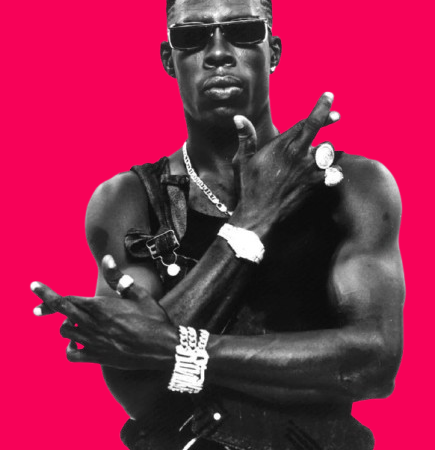
Within the architecture of late-1990s dancehall, Red Rat occupies a distinct and carefully defined space—an artist whose ascent was neither accidental nor excessive, but calibrated through tone, timing, and unmistakable individuality.
Emerging from Jamaica as Wallace Wilson, Red Rat entered a competitive era dominated by forceful delivery and lyrical intensity. Yet his divergence from that norm became his signature. He favored melody over aggression, clarity over density, and charisma over confrontation. This stylistic restraint allowed his music to travel—geographically and culturally—finding deep resonance across African audiences who embraced his sound as both fresh and familiar.
His commercial breakthrough was anchored by his debut album Oh, No… It’s Red Rat, a project that achieved significant international success, climbing to No. 1 on the Billboard Top Reggae Albums chart. This was not merely a chart position—it was a declaration of arrival. The album presented a cohesive identity: witty, rhythmically engaging, and broadly accessible without sacrificing artistic intent.
At the center of this success stood tracks like Shelly Ann, which exemplified his approach—light in tone yet structurally precise, effortlessly bridging dancehall and pop sensibilities. The song’s reach extended far beyond Jamaica, embedding itself into African music culture at a time when Caribbean sounds were being actively absorbed and reinterpreted across the continent.
A follow-up project, Tight Up Skirt, reinforced his presence, though it operated within a shifting musical landscape. By the early 2000s, dancehall had begun to favor harder, more aggressive sonic textures. Red Rat’s measured and melodic style, once a defining advantage, now existed slightly outside the genre’s evolving mainstream.
In terms of formal recognition, Red Rat’s career was marked less by a cabinet of major international awards and more by chart authority and cultural penetration. His Billboard-topping album remains his most concrete industry accolade, supported by widespread radio play, international touring, and enduring audience reception. In dancehall—a genre where influence often outweighs trophies—this form of recognition carries its own weight.
Rather than recalibrate his artistry to align with emerging trends, Red Rat gradually withdrew from the forefront. His retreat was not abrupt, nor was it publicly dramatized. It reflected a conscious preservation of identity—a refusal to dilute a sound that had already achieved clarity and impact.
Yet absence has not diminished relevance.
Across Africa, his music persists—not as a fading echo, but as an enduring reference point. His songs continue to animate nostalgic spaces, functioning as both memory and benchmark. For many listeners, Red Rat represents a moment when dancehall balanced playfulness with precision, and accessibility with authenticity.
“Africa’s Forgotten Voices” seeks not to romanticize the past, but to restore perspective.
Red Rat’s career illustrates a complete artistic arc: a deliberate rise, a definitive peak, and a dignified withdrawal. His legacy is not contingent on continuous visibility, but on the permanence of his contribution.
And by that measure, his voice remains—clear, influential, and impossible to overlook.
Live The Joy Life!
Discover more from JOY FEELINGS
Subscribe to get the latest posts sent to your email.