




 admin
Japan’s teenage sensation turns a nerve-racking final attempt into a world championship triumph, proving that skill, courage and composure can make all the difference when the stakes are highest.
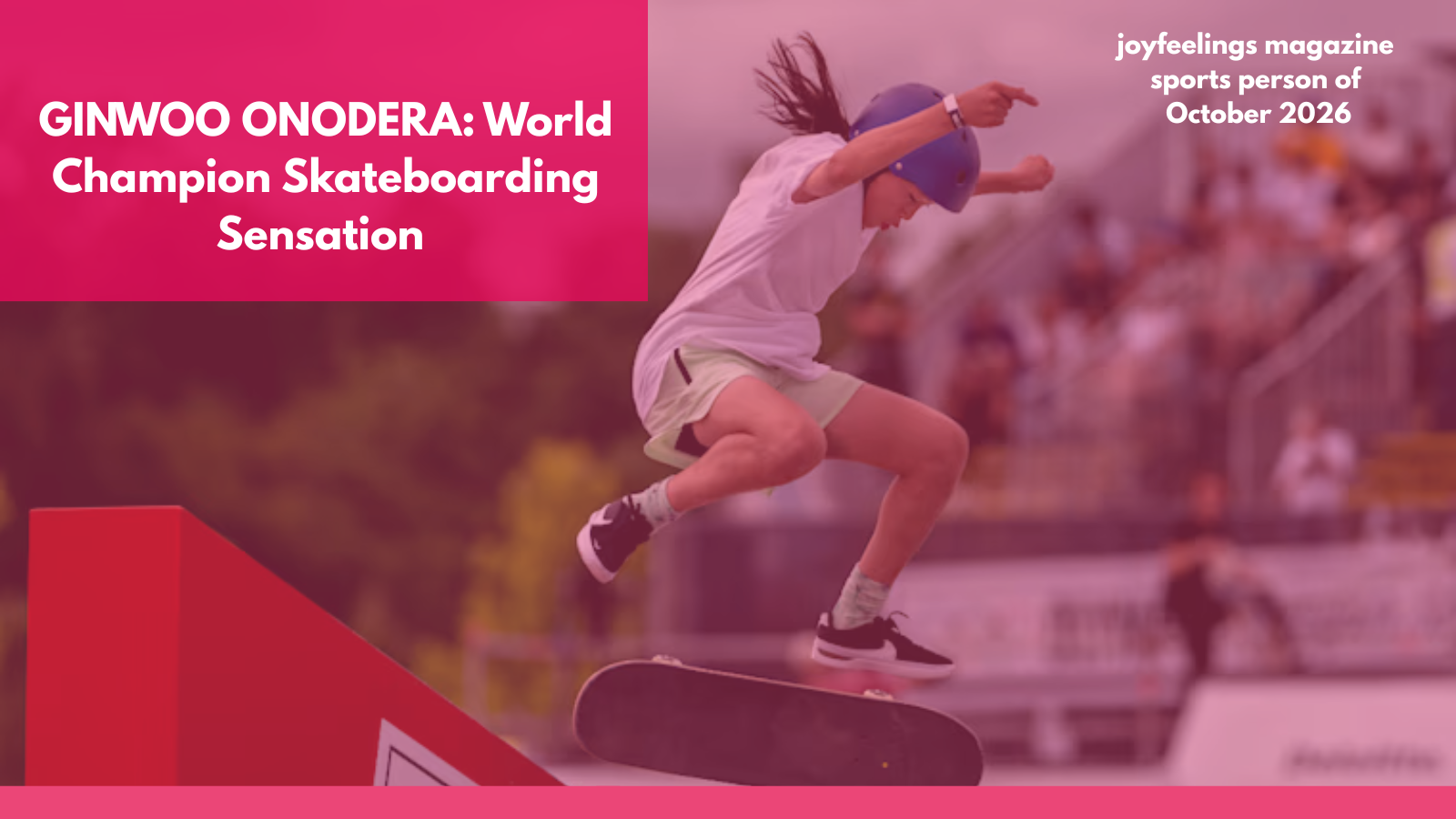
At just 16 years old, Japan’s Ginwoo Onodera has given the sporting world a moment to remember. At the 2026 World Skate Games in Asunción, Paraguay, the young skateboarder rose above intense competition to claim the men’s street skateboarding world title, delivering an extraordinary final trick when his hopes of victory appeared to be slipping away.
Onodera finished the competition with 182.26 points, edging out South Korea’s Juni Kang, who scored 179.32, while Japan’s Taiga Nagai took bronze with 166.18 points. But the numbers tell only part of the story. The defining moment came when Onodera, having missed his first two attempts at an individual trick, had just one opportunity left to secure the title.
To understand the significance of his victory, it helps to understand what street skateboarding demands of its competitors.
Unlike sports in which athletes compete by running faster, jumping higher or crossing a finish line first, street skateboarding combines athletic ability with creativity, precision and technical difficulty. Competitors navigate a specially designed course featuring obstacles such as rails, ledges, stairs and gaps, performing tricks that require them to manipulate the skateboard while maintaining control of their bodies and balance.
A trick might involve flipping the board beneath the feet, rotating in the air, sliding along a rail or combining several movements into one complex manoeuvre. Judges assess the difficulty and quality of the tricks, how cleanly they are executed and the overall performance.
In the men’s street final in Asunción, the competition combined a 45-second run with a separate best-trick section. The run gave each skateboarder an opportunity to demonstrate consistency and link several manoeuvres into a flowing performance. The best-trick section offered another challenge: athletes had to execute individual tricks that could earn them valuable points and potentially change the final standings.
Onodera began strongly, scoring 90.14 points for his run. Kang was close behind with 89.21, setting the stage for a fiercely contested battle as the final moved into the best-trick section.
Kang kept the pressure on with a technically demanding switch-stance 270 backside lipslide, earning a strong score and remaining within reach of the title. Onodera, however, struggled to land his first two attempts. With only one attempt remaining, he needed an exceptional performance to overtake his rival.
Then came the moment that would define his championship.
On his final attempt, Onodera successfully landed a bigflip into a frontblunt slide with a big-spin exit. In simple terms, the trick combined a complex flip of the skateboard, a slide along the rail and a further rotation as he came off. Each movement demanded precise timing and control, and any mistake could have cost him the opportunity to win.
The judges awarded him 92.12 points for the trick, taking his overall score to 182.26 and placing him ahead of Kang, who finished on 179.32. After two failed attempts, the teenager had delivered precisely when it mattered most.
His victory was not simply a matter of taking a risk. Executing a trick of that difficulty requires extensive practice, physical coordination, an understanding of the course and the confidence to commit to a movement under pressure. What made Onodera’s performance remarkable was his ability to bring those qualities together when the margin for error was almost nonexistent.
The final also illustrated one of skateboarding’s most compelling characteristics: a competition can change dramatically in a matter of seconds. A missed landing can leave an athlete struggling to recover, while one successful trick can transform the standings. Competitors must therefore combine technical skill with the mental resilience to recover from mistakes without losing focus on the opportunities that remain.
Onodera’s achievement was part of a successful championship for Japan. His compatriot Yumeka Oda won the women’s street title, giving Japan both street skateboarding gold medals. South Korea’s Kang and Japan’s Nagai completed the men’s podium, reflecting the international depth of talent in the sport.
For Onodera, the title marks a major milestone in a career that is still unfolding. His age makes the achievement particularly striking, but it is the quality of his performance that ultimately sets him apart. He was not crowned champion simply because he was a promising young athlete; he earned the title by producing the highest overall score in the final.
His triumph also offers an encouraging glimpse of the next generation of skateboarding talent as athletes begin looking towards future international competitions, including the road to the Los Angeles 2028 Olympic Games.
For Joy Feelings Magazine’s Sports Person of the Month, Onodera’s story carries a message that extends beyond the skateboarding course. Setbacks are inevitable in sport and in life, but an early failure does not have to determine the final outcome. Sometimes, the decisive difference lies in the ability to regroup, remain focused and give the next opportunity everything you have.
At 16, Ginwoo Onodera has already demonstrated that capacity on the world stage. Two unsuccessful attempts could have ended his championship hopes, yet his final trick turned the competition in his favour and secured him a world title.
Live The Joy Life!
Discover more from JOY FEELINGS
Subscribe to get the latest posts sent to your email.