
 admin
admin 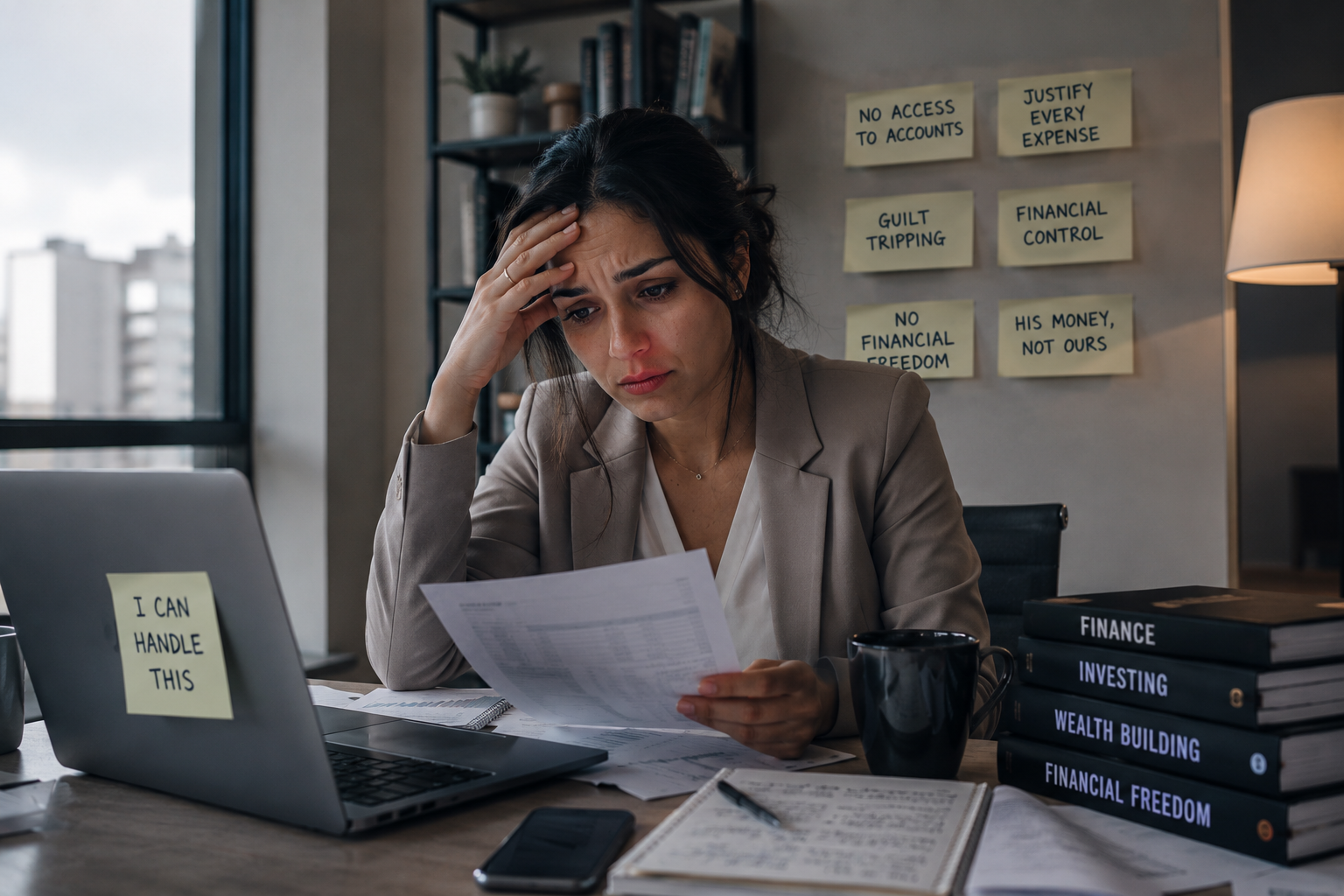
Not all abuse looks like shouting, bruises, or broken things.
Sometimes it looks like a “loving” partner saying: “Baby, I’ll handle the money so you don’t stress.”
And at first, it sounds responsible. Even caring. But slowly… something changes. Do’t miss the signs because this is how they begin.
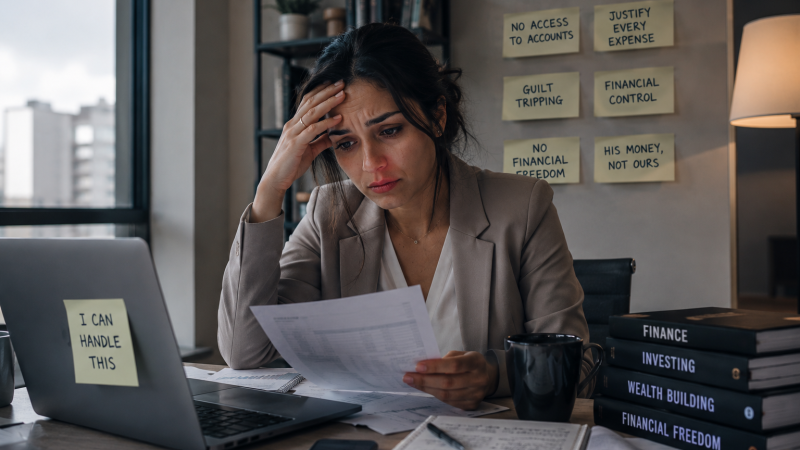
When you ask for money, for transport, you get questioned. You buy something small and are told to explain every shilling. Your salary goes into “our account” but you can’t touch it freely. Your phone even starts feeling like it belongs to someone else.
That’s financial abuse—and it’s more common than people think.
When “love” becomes control. Many survivors don’t realise they are in financial abuse until they are already trapped.
One woman in Australia shared her story in a national media report. She said her partner started by “helping” her manage money. But later, he checked every transaction she made and controlled her spending so tightly she had no access to her own income. She said, “I didn’t even realise I had lost control of my own money until I needed to leave and had nothing.”
That’s the trap—by the time it feels wrong, escape already feels impossible.
Researchers studying domestic economic abuse have found this pattern again and again: control doesn’t start loudly. It grows slowly, like a habit you don’t notice until it becomes a cage.
Its like debt you never asked for. In some relationships, financial abuse doesn’t just mean controlling money—it means creating debt in your name.
Court cases in Australia have shown women who were pressured into signing loans for their partners. Some thought they were “helping the relationship.” Others were directly pushed or emotionally pressured.
When the relationship ended, the partner walked away… but the debt stayed.
One legal review described how survivors were left paying mortgages or business loans they never benefited from. In court, judges often had to step in using laws like “undue influence” to cancel unfair agreements.
Imagine that: leaving a relationship, but your financial chains remain behind. It doesn’t only happen in romantic relationships Financial abuse is not only about partners.
Some older adults have shared experiences where family members slowly take over pensions or bank accounts “to help manage things.” At first, it sounds like care. Later, it becomes dependence. And eventually, the person no longer has control over their own money.
A documented case study in social work research showed how an elderly woman lost control of her finances to a relative until she could no longer make independent decisions. By the time she realised what was happening, she felt too powerless to challenge it.
That’s the danger—it often hides inside trust. In today’s world, even your phone can be used against you
Financial abuse has also gone digital.
Some survivors report partners tracking every mobile money transaction, demanding passwords, or monitoring online banking apps. In extreme cases, even payment messages are used to intimidate or control.
Researchers studying digital banking abuse have found that financial systems themselves can be misused for control when privacy is violated or access is shared under pressure.
So it’s no longer just about cash in hand—it’s about access, passwords, apps, and digital control.
“Why didn’t they just leave?” — money is the answer. This is the question people often ask. But imagine this: No savings. No independent bank account. Debt in your name. No job because you were told to stop working. And children depending on you.
Where exactly do you go?
That’s why financial abuse is so powerful—it removes options before you even realise you need them.
Studies on domestic violence consistently show that economic dependence is one of the biggest reasons people stay in abusive relationships. It’s not about weakness—it’s about survival.
Even famous stories show how powerful financial control can be. The Britney Spears conservatorship case sparked global conversation about control and autonomy. For years, she had limited control over her own finances and decisions under a legal arrangement that others managed. While it was a legal system, not a relationship case, it made millions of people ask a hard question:
What does freedom really mean if you don’t control your own money?
That conversation helped many people finally recognise something important: control doesn’t always look violent—it can look legal, normal, or even “for your own good.”
The damage doesn’t end when the relationship ends. Survivors often walk away with more than emotional pain. They may leave with: Debt they didn’t choose, Empty bank accounts, Damaged credit or financial history, Interrupted jobs or education, Years of rebuilding ahead.
It’s not just leaving a person—it’s rebuilding an entire life system from scratch. The truth we don’t talk about enough
Financial abuse is not “just money problems.”It is control.It is dependency. It is power disguised as care.
And because it doesn’t always leave visible scars, many people suffer quietly for years without even naming it. But once you can name it—you can begin to see it. And once you can see it—you can begin to leave it. Because love should never feel like permission you have to ask for just to survive.
Live The Joy Life!
Discover more from JOY FEELINGS
Subscribe to get the latest posts sent to your email.