





 admin
admin 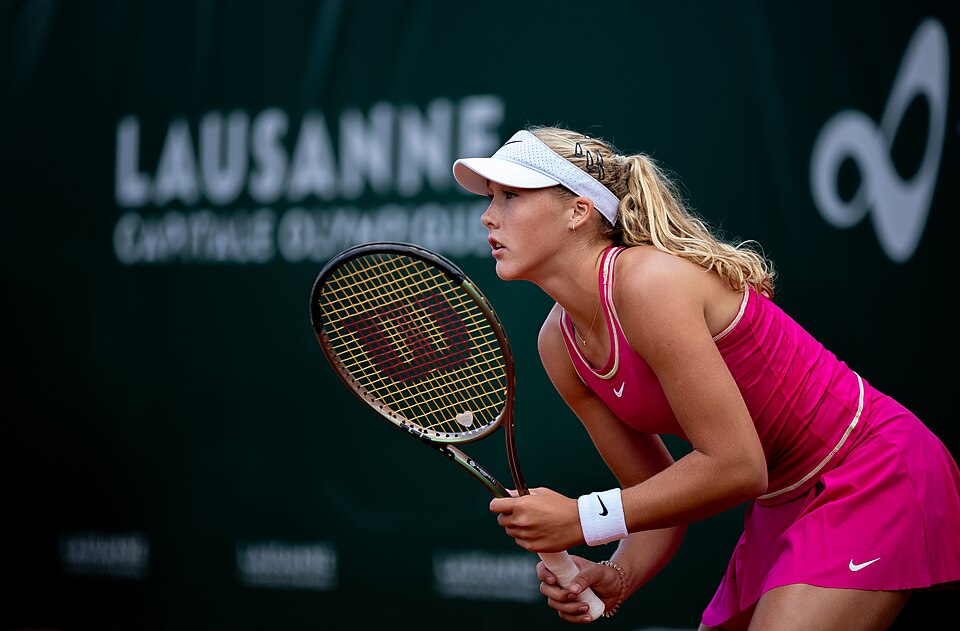
Mirra Andreeva, aged just 19, has emerged as one of the brightest young stars in tennis. She is the youngest woman to reach a Grand Slam final since 2022.
At just 19 years old, Mirra Andreeva walks onto the clay courts of Roland-Garros with the poise of a veteran and the fire of a teenager chasing impossible dreams. In June 2026, she has become one of the most talked-about athletes in the world—not because of celebrity status or controversy, but because of an extraordinary question now echoing through the tennis community:
Is Mirra Andreeva the future of women’s tennis?
A Star Born Far from the Spotlight
Born on April 29, 2007, in Krasnoyarsk, Siberia, Russia, Mirra Andreeva’s journey to the summit of world tennis began thousands of miles away from the glamorous stadiums she now commands.
Like many elite athletes, her story is one of relocation and sacrifice. Her family moved to support her training ambitions, eventually allowing her to develop her game in France—ironically, the country where she would make some of her biggest breakthroughs.
What separates Andreeva from many young talents is that she has never seemed intimidated by the biggest stages.
At 15, she was already competing against seasoned professionals.
By 17, she had reached the latter stages of Grand Slam competition.
Now, at 19, she has become the youngest woman to reach a Grand Slam final since Coco Gauff did so in 2022.
The progression has been astonishing, yet carefully built.
The Cost of Greatness
Investigative reporting into youth sports often reveals uncomfortable truths: missed childhoods, intense parental pressure, isolation, and burnout.
While Andreeva’s public image reflects composure and confidence, her rise also illustrates the demands placed on prodigies.
Professional tennis is relentless.
Players spend months away from home.
Education, friendships, and ordinary teenage experiences are often sacrificed in pursuit of excellence.
Andreeva herself has spoken openly about not always believing she would reach this level.
“I never actually thought that I’d be able to win big tournaments or be in a Grand Slam final,” she admitted during the French Open. “It was just all my dreams.” Those dreams have now become reality.
Behind every forehand winner lies years of repetition.
Behind every victory speech lies emotional exhaustion.
Behind every teenager in elite sport lies a child who grew up faster than expected.
Maturity Beyond Her Years
Andreeva’s tennis has evolved dramatically, but perhaps her greatest transformation has been emotional.
Earlier in her career, flashes of frustration occasionally overshadowed her brilliance. Critics questioned whether she possessed the temperament required to sustain success at the highest level.
In Paris this year, she answered those doubts.
During her semifinal victory over Marta Kostyuk, Andreeva displayed remarkable composure despite the politically charged atmosphere surrounding the match. She dismantled her opponent with clinical precision, winning 6–1, 6–3 to reach her first Grand Slam final.
Observers noticed something different.
This was not simply a talented teenager.
This was a young woman learning how to master herself.
Former Wimbledon champion Conchita Martínez, who has guided Andreeva’s development, has been credited with helping refine not only her tactical awareness but also her emotional resilience.
The result has been striking.
The teenager who once played with youthful impulsiveness now combines intelligence, patience, and fearless shot-making.
Why the World Is Paying Attention
Women’s tennis has spent years searching for its next defining generation.
While established stars continue to inspire, fans and analysts alike have been eager to identify the players who will shape the sport’s future.
Andreeva has emerged as one of the strongest answers.
She possesses:
- Exceptional court intelligence;
- A versatile all-court game;
- Mental resilience uncommon for her age;
- The willingness to adapt and improve.
More importantly, she represents possibility.
Young girls watching from Uganda, India, Brazil, or Canada can see someone close to their own age competing against the world’s best—and winning.
In an era increasingly shaped by social media narratives and instant celebrity, Andreeva reminds audiences that mastery still requires patience.
Talent may open doors.
Discipline keeps them open.
Beyond the Trophy
Regardless of the outcome of the French Open final, June 2026 already belongs to Mirra Andreeva.
Winning would make her one of the youngest Grand Slam champions in modern history.
Losing would not diminish the significance of her achievement.
The true story is not merely about reaching a final.
It is about what that journey represents.
It is about resilience.
It is about growth.
It is about navigating extraordinary expectations while still discovering who you are.
At 19, Mirra Andreeva carries the hopes of fans, the scrutiny of critics, and the burden that often accompanies exceptional talent.
Yet she continues to play with courage.
JoyFeelings Verdict
Mirra Andreeva is our Sports Person of the Month for June 2026 because she embodies the qualities that transcend sport.
She has shown that greatness is not only measured by trophies but by perseverance, humility, and the willingness to evolve.
In a world captivated by overnight success stories, Andreeva’s rise reveals something deeper:
Champions are not simply born.
They are shaped—through sacrifice, setbacks, discipline, and belief.
Whether this French Open marks the beginning of an era or merely another chapter in an already remarkable career remains to be seen.
But one thing is certain.
The tennis world is no longer asking who Mirra Andreeva is.
It is asking how far she can go.
And the answer may very well redefine women’s tennis for years to come.
Discover more from JOY FEELINGS
Subscribe to get the latest posts sent to your email.