



 admin
admin 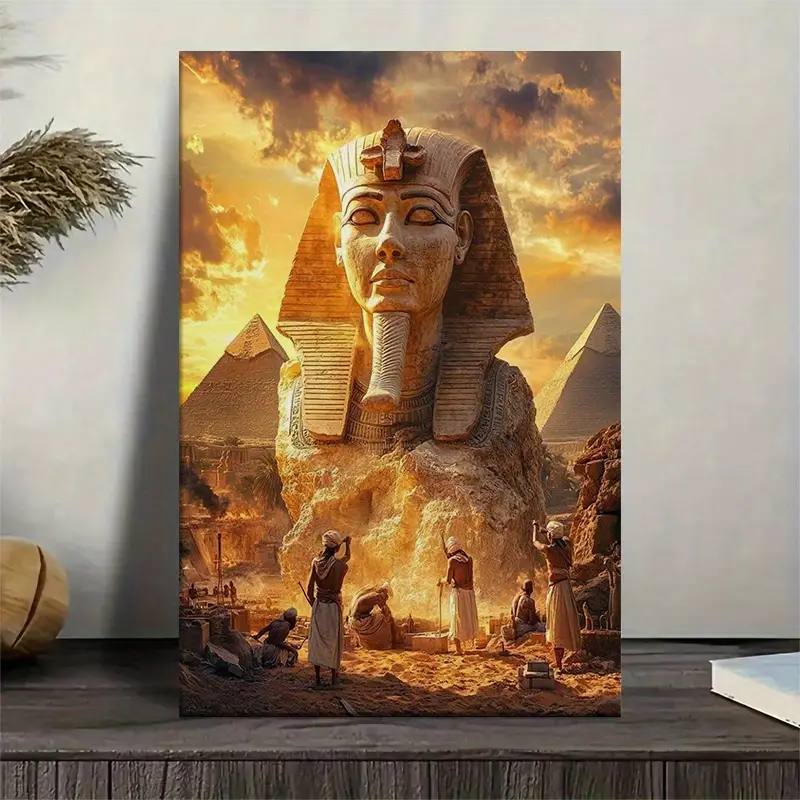
It begins, as many great obsessions do, with a door.
Sealed for thousands of years and buried beneath heat and silence, Egyptian tombs were never meant to be opened again. They were designed as eternal sanctuaries—final resting places for kings who believed death was not an end, but a passage into another life (Taylor, 2001). In the worldview of Ancient Egypt, existence continued beyond the grave, and preparation for that next stage was essential to survival in eternity.
And yet, in 1922, that silence was broken.
When Howard Carter peered into the tomb of Tutankhamun in the Valley of the Kings, he famously described seeing “wonderful things” (Carter & Mace, 1923). Gold shimmered in the dark. Statues stood guard. Objects—untouched for more than 3,000 years—remained exactly where ancient hands had placed them.
What the modern world encountered in that moment was not just treasure.
It was a preserved philosophy of life, death, and eternity.
The Curse That Never Left The so-called “curse of the pharaoh” quickly became a global sensation after the tomb’s discovery, fueled by newspaper stories and popular imagination (Luckhurst, 2012). A few unexpected deaths among individuals connected to the excavation helped the legend spread.
But historians and archaeologists today largely agree that the curse was more myth than reality.
The real “curse” may be something else entirely: a lasting psychological and cultural fascination that continues to shape modern thought about the ancient world. Once the tombs were opened, curiosity about Egypt intensified across science, media, and popular culture.
People weren’t just intrigued by the artifacts.
They were drawn into the mindset behind them.
A Civilization That Prepared for Forever Ancient Egyptians approached death differently from most modern societies. Rather than seeing it as a final end, they believed life would continue in another realm, provided the body and soul were properly preserved and protected (Faulkner, 1994).
That belief shaped everything inside their tombs.
Archaeological research shows that Egyptians carefully stocked burial chambers with items needed for the afterlife, including food, clothing, tools, and objects of comfort (Ikram, 2015). Furniture such as beds, stools, and chairs have been found intact in royal burials, demonstrating how tombs were designed to resemble fully equipped living spaces.
Even leisure mattered. Board games such as Senet were placed in tombs, suggesting that enjoyment and entertainment were believed to continue beyond death (Piccione, 1980).
Beauty, too, was considered important. Perfumes, oils, cosmetics, and mirrors found in royal burials reveal how grooming and identity extended into the afterlife (Manniche, 1999).
And at the center of it all was the body itself.
Through the complex process of mummification—removing organs, treating the body with resins, and wrapping it in linen—Egyptians sought to preserve the physical form so that the soul could recognize and return to it.
This was not symbolic ritual alone.
It was preparation for survival.
The Discovery That Changed History While many Egyptian tombs had been looted over centuries, Tutankhamun’s burial was different. Much of it remained intact, offering scholars an unprecedented glimpse into royal burial practices and the worldview of ancient Egypt (Reeves, 1990).
Inside were thousands of objects: golden masks, chariots, jewelry, ceremonial weapons, clothing, and intricately carved furniture. Each item carried religious and cultural meaning tied to the journey into the afterlife.
For historians, the discovery transformed the study of Egyptology. For the public, it ignited a global fascination that continues today.
It felt less like discovering the past—and more like interrupting it.
Beauty in the Face of Mortality One reason Egyptian tombs continue to captivate the modern imagination is the striking contrast they present.
Gold sits beside mortality. Art flourishes in silence. Luxury surrounds death.
Modern Western culture often distances beauty from death, yet Egyptian burial culture blended the two seamlessly. Scholars studying cultural attitudes toward death note that such practices reflect a society deeply comfortable with mortality as part of a larger cosmic order (Elias, 1985).
This difference in perspective challenges modern assumptions.
It invites reflection rather than avoidance.
Myth, Media, and the Power of Story In the decades following the tomb’s discovery, fascination with Egypt spread through books, exhibitions, and eventually cinema. Films such as The Mummy helped transform Egyptian tombs into symbols of adventure, mystery, and supernatural intrigue (Higashi, 2014).
While these portrayals are dramatized, they reinforce a real historical truth: Egyptian tombs are among the most compelling archaeological sites ever discovered.
They combine science, spirituality, art, and mystery in ways few other civilizations achieved.
A Civilization That Still Challenges Us Part of the enduring fascination also lies in Egypt’s remarkable achievements. The architectural precision of the Pyramids of Giza, along with advances in medicine, mathematics, and astronomy, continues to impress scholars studying early civilizations (Kemp, 2006).
Egypt demonstrates that ancient societies possessed sophisticated knowledge systems that were deeply integrated into religion, governance, and daily life.
This challenges the idea that progress moves in a simple straight line toward modernity.
Instead, it suggests that ancient cultures may have understood certain aspects of life—and death—with remarkable depth.
So What Is the Curse Today? Today, the “curse of the pharaoh” may not be supernatural at all.
It may be intellectual.
Egypt forces modern society to confront questions we often avoid:
What happens after death? What makes a life meaningful? What will remain of us in thousands of years?
Ancient Egyptians answered those questions with confidence. They prepared carefully, preserved identity, and built structures meant to last forever.
Modern life, by contrast, often moves quickly—focused on the present rather than eternity (Bauman, 2000).
And perhaps that contrast is what keeps drawing us back.
Why We Still Can’t Look Away New discoveries continue to emerge from Egyptian archaeology, reminding us that much of the civilization remains hidden beneath the desert sands.
Each tomb opened is not just a discovery of objects.
It is a rediscovery of ideas.
In every preserved artifact and every carefully prepared burial, there is a message left behind by a civilization that believed memory and identity should endure beyond time.
And perhaps that is why Egypt still haunts the modern imagination.
Because somewhere within those tombs lies a truth that feels both ancient and strangely relevant:
Human beings have always searched for eternity.
And the people of Egypt built their entire world around it.
Live The Joy Life!
Discover more from JOY FEELINGS
Subscribe to get the latest posts sent to your email.